What is a Video to PDF converter?
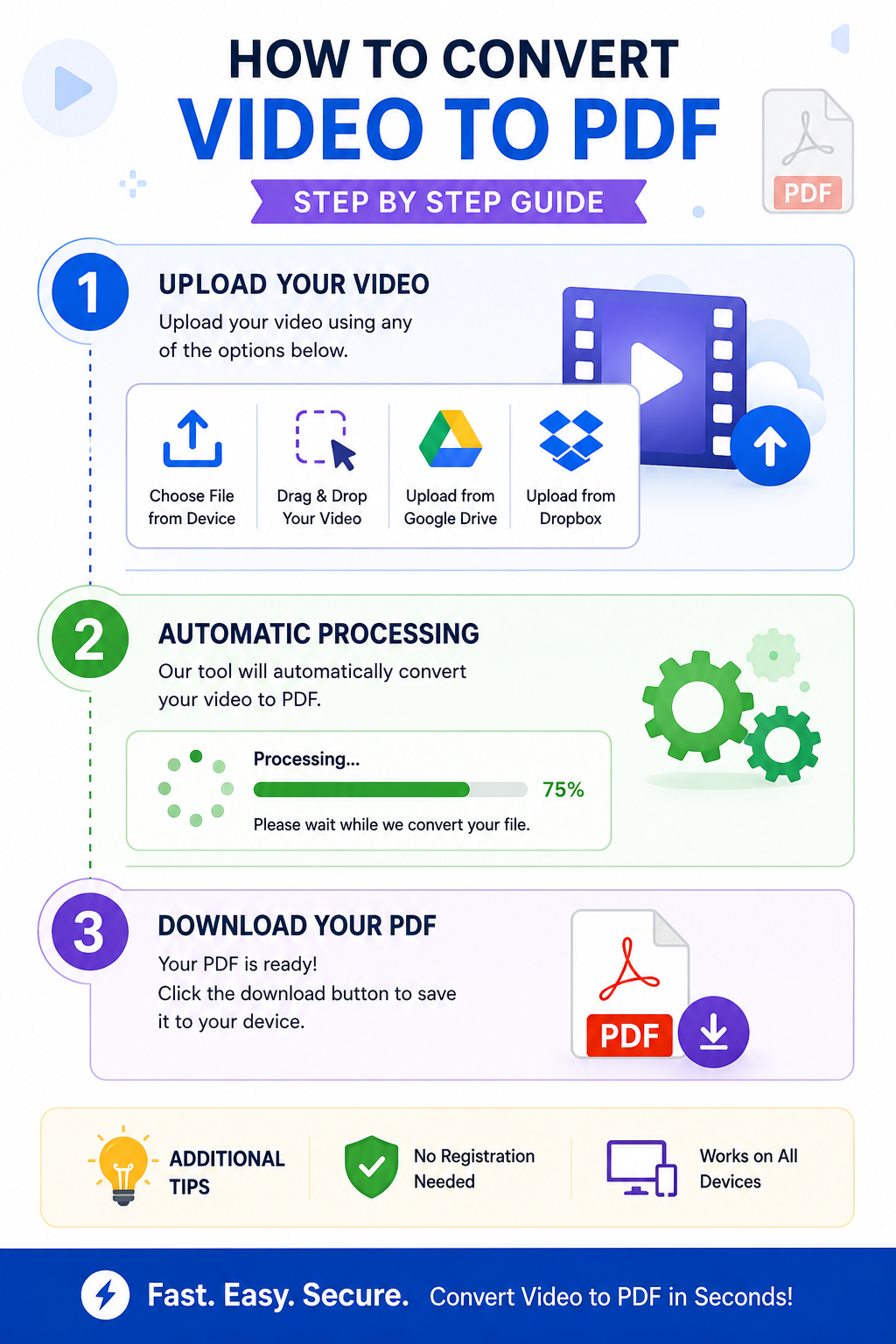
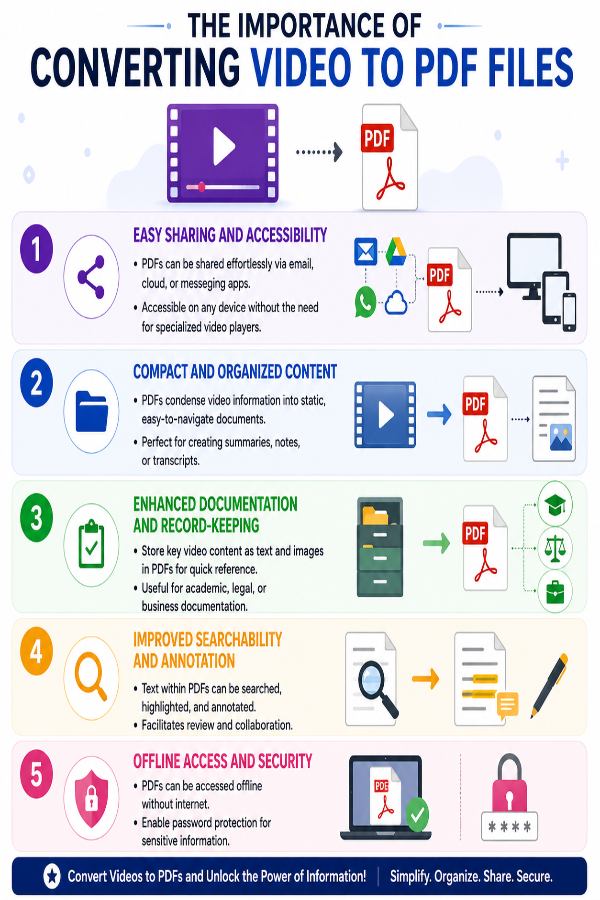
A Video to PDF converter turns selected frames from a video into a PDF document. Instead of putting the entire video into the PDF, it creates the document from the images captured from the video.
How is the PDF created from a video?
The tool captures frames from the uploaded video based on your sampling settings and any frames you capture manually. The frames you keep are then used to create the PDF.
What is video frame sampling?
Video frame sampling determines how often a frame is taken from the video. For example, a 10-second sampling interval means frames can be captured at 10-second intervals.
When should I use a shorter sampling interval?
A shorter interval can be useful when the video changes quickly and you need to capture events that happen close together. It can produce more frames for a given length of video.
When is a longer sampling interval useful?
A longer interval can be useful for videos where important content changes less frequently. It can help avoid collecting a large number of similar frames.
What is the custom sampling option?
Custom sampling lets you enter your own interval in seconds instead of using one of the preset values. This is useful when you need a specific sampling frequency.
What does "resample" mean in the video to PDF tool?
Resampling is related to how the video frames are sampled for capture. The number and timing of frames shown by the tool can change when the sampling setting is changed.
Why does the tool show the number of frames captured and an interval?
The capture information gives you an indication of how many frames have been collected and the interval being used for sampling. The values can change when you modify the sampling settings.
What happens if I change the custom sampling time?
Changing the custom value changes the sampling interval used by the tool. As a result, the number and timing of frames available for capture may also change.
What is the difference between sampling and manually capturing a frame?
Sampling uses the selected time interval to determine when frames are captured, while manual capture lets you take a frame at a particular moment yourself.
How does the tool indicate that a frame has already been captured?
The tool shows when the current frame has already been captured, making it easier to recognize duplicate selections while moving through the video.
How do I choose which video moments should go into the PDF?
Use sampling to collect frames at regular intervals or manually capture important moments. Review the captured images afterward and remove frames that are not relevant.
Why do several captured frames look similar?
Frames captured close together can show nearly the same scene, particularly when there is little movement or change in the video. Using a longer sampling interval can reduce the number of similar frames.
Why are some important moments missing from the captured frames?
A sampling interval may skip moments that occur between two capture points. For scenes where exact timing matters, manually capturing the important moment can help include it.
What happens if the video changes quickly between sampling points?
A regular sampling interval may not capture every important change in a fast-moving section. Manual frame capture can be useful when a specific moment needs to be included.
Can I create a PDF from only selected moments of a long video?
Yes. You can capture the moments that matter, review the collected frames, and remove unwanted images before creating the PDF.
Can a video with a lot of movement be converted into a useful PDF?
Yes, but the usefulness of the PDF depends on which frames are selected. For fast-moving footage, manually capturing key moments can help avoid missing important scenes.
Why would I convert a video into a PDF?
A PDF can make selected information from a video easier to save, print, share, or review as a collection of still images rather than watching the original video.
Can I use a video to create a visual reference document?
Yes. Captured frames can be combined into a PDF to create a visual reference from important scenes, steps, screens, or moments in a video.
What happens to frames that I remove?
Frames removed from the captured selection are not included in the PDF. Only the frames you keep are used when the PDF is created.
Does the PDF contain the entire video?
No. The PDF is made from selected captured frames rather than containing the original video as a playable video file.
Why does the PDF contain more pages than expected?
Each selected captured frame can become part of the resulting PDF. If many frames are kept, the final document can contain many pages or images.
Why should I review the captured frames before downloading?
Reviewing the frames helps you spot duplicates, irrelevant scenes, or unwanted captures before they become part of the final PDF.
What is the difference between a video and a PDF made from its frames?
A video contains moving images over time, while the PDF contains still images captured from selected moments. The PDF is therefore useful for viewing or sharing specific visual information without playing the video.